Event
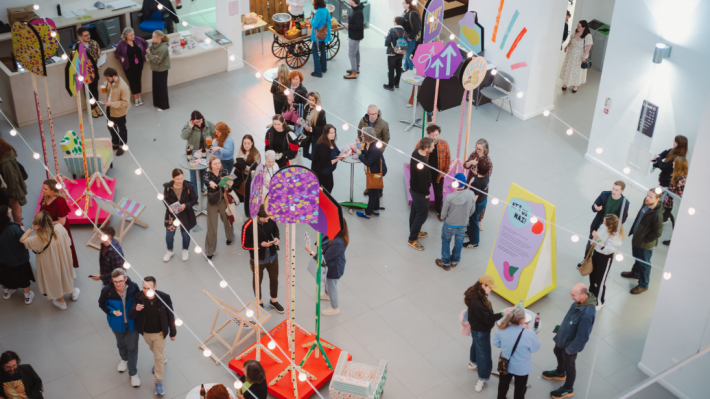
Museum Late: Fashionably Late
The adults-only event that gives you a chance to discover the Ulster Museum...Late and after hours!
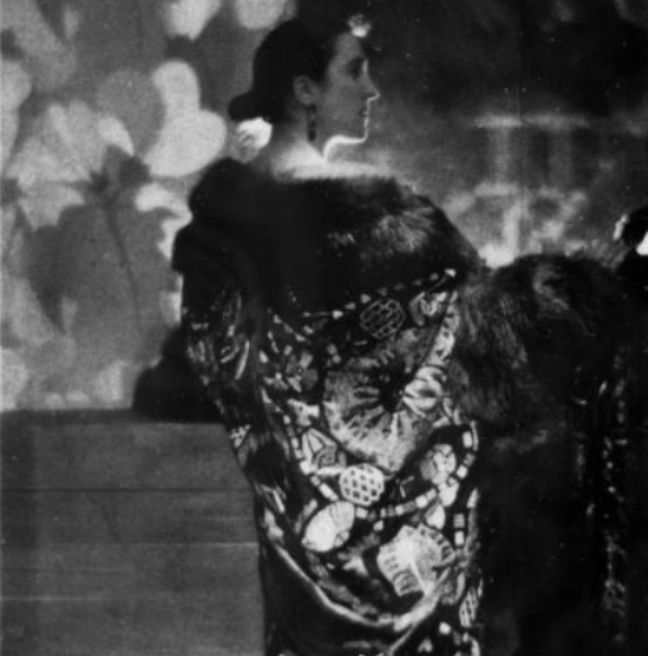
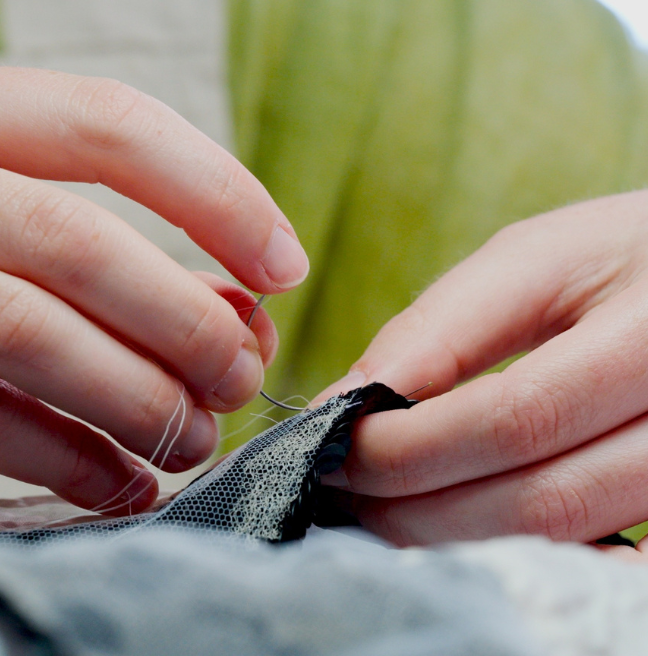
Object Conservator Bethany Skuce discusses the challenges of working on the delicate Charlotte Duclos evening dress made from gelatine sequins.
Evening dress
Charlotte Duclos
1909
Gelatin sequins, silk
Worn by Mary Joy Newland (1883–1960), an American railroad heiress of Irish origin, who married the Dutch Count Julius Menno Frederik David van Limburg Stirum et du Saint Empire (1877–1954), of one of the oldest noble families of Europe, in 1908.
The sequins of the dress are an early form of plastic made of gelatin. Manufacturers in France started to produce gelatin sequins in the 1890s and they quickly became popular as they were lightweight, could be coated in any colour, and made into any size or shape. However, they are very difficult to clean and will melt if exposed to heat, or dissolve if exposed to sweat orrain.
Donated 1988 by Ms Patricia Mencarelli
BELUM.T3003
The adults-only event that gives you a chance to discover the Ulster Museum...Late and after hours!
In this talk, Dr Catherine O' Hara will explore the story of twentieth-century Irish fashion and textiles.
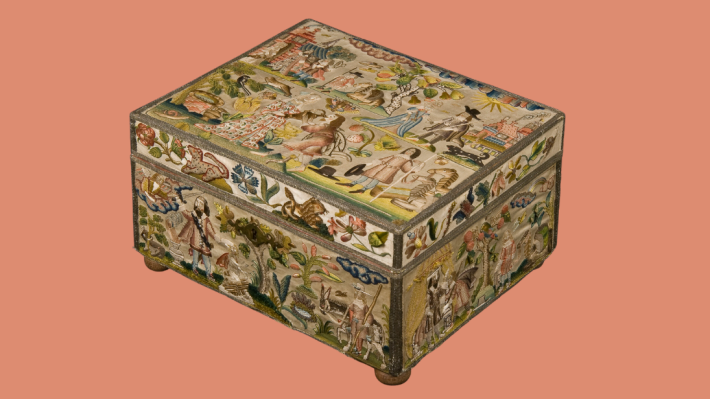
Dr Lynn Hulse explores the attitudes towards female education following Reformation, and the impact this had on English domestic needlework
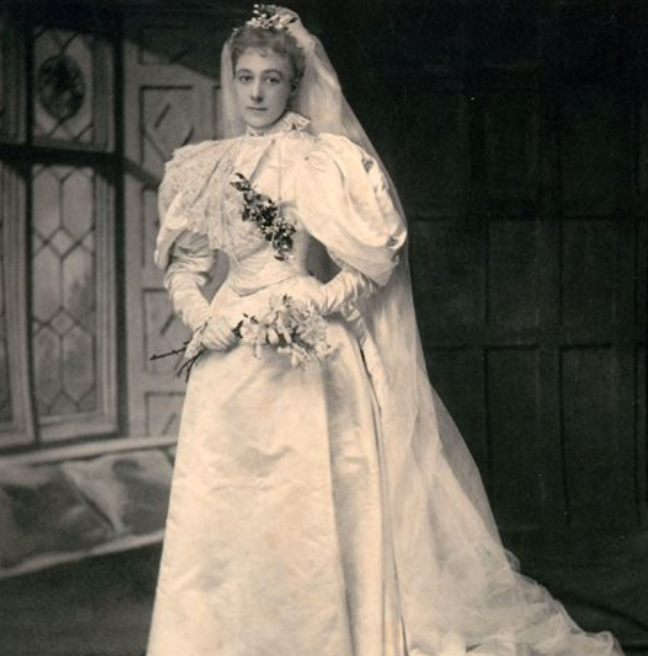
A remarkable donation: two gowns that once belonged to the Scottish-American textile heiress, Elizabeth Balfour Clark (1870-1926).
The three fascinating women behind one beautiful cloak. Written by Curator of Fashion and Textiles, Charlotte McReynolds.