Image

Takabuti has become an iconic resident at the Ulster Museum. But who was she? How did she come to be in Northern Ireland? And what is her future?
Takabuti lived in Thebes, Ancient Egypt, over 2,500 years ago - most likely during the end of the 25th dynasty. She was a married noblewoman in charge of a great house. Her father, Nespare, was a priest of Amun.
Her name and that of her father and her mother, Tasenirit, are written in hieroglyphics across her coffin.

Takabuti’s lineage has a rich mixture of genetic backgrounds and confirms Ancient Egypt as a multicultural society. This was likely shaped by the trade, migration and invasions that we know are at the core of the story of Ancient Egypt.
It is evident that Takabuti's hair and teeth were important to her as they are very well cared for. This also indicates a level of wealth and social status. Her hair was cut, curled and gelled, which was unusual at a time when most mummified individuals appear to have been shaven at the time of death.
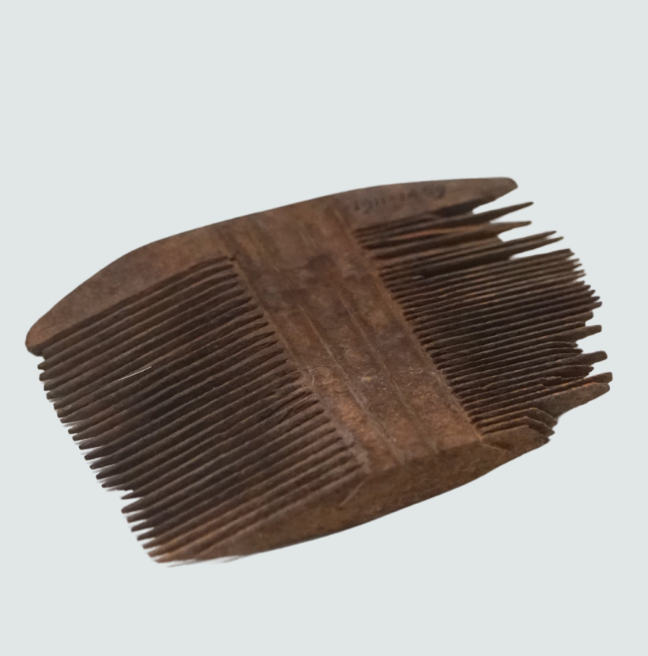
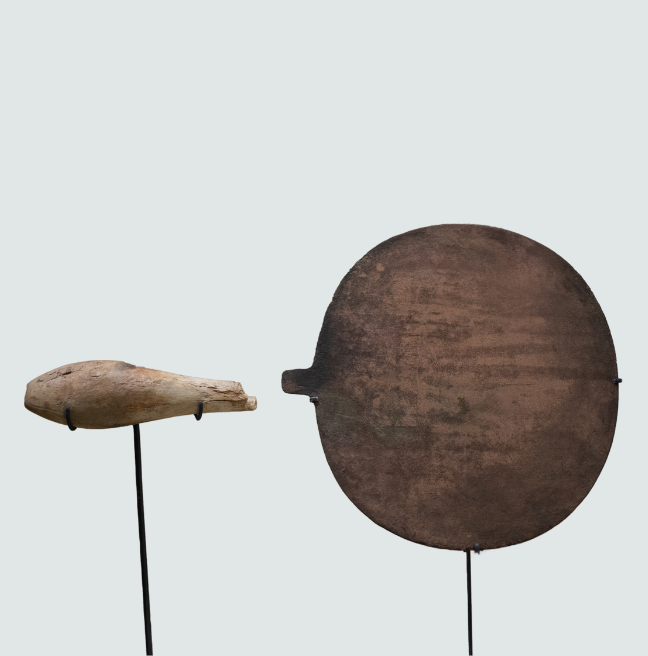
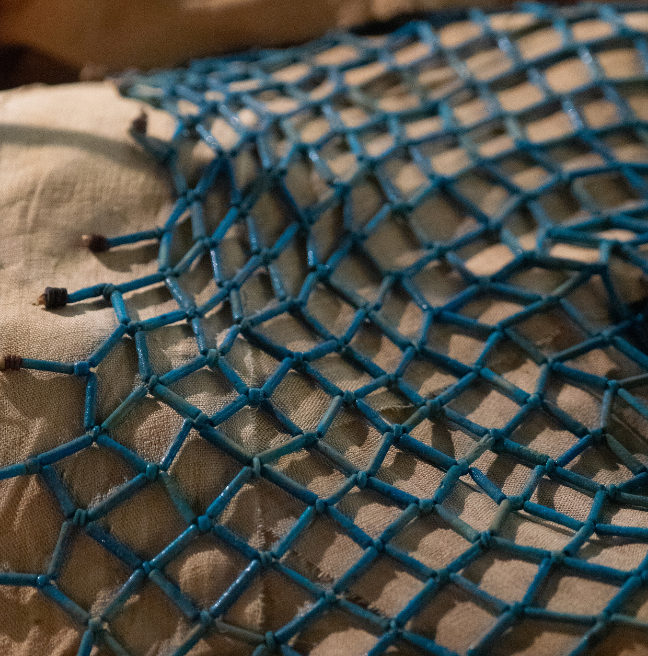
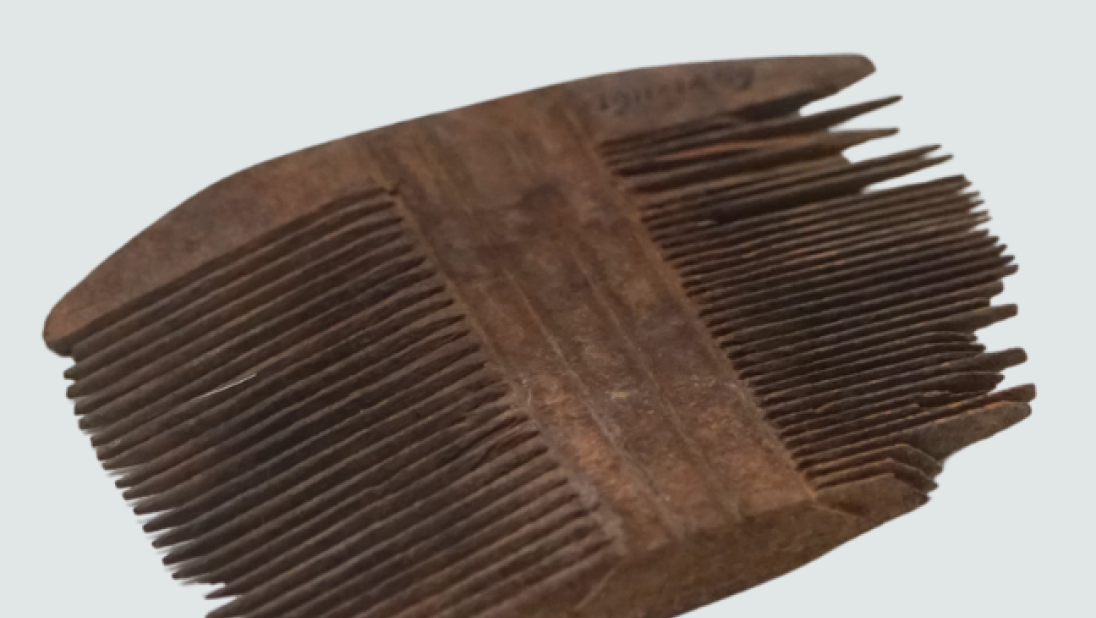
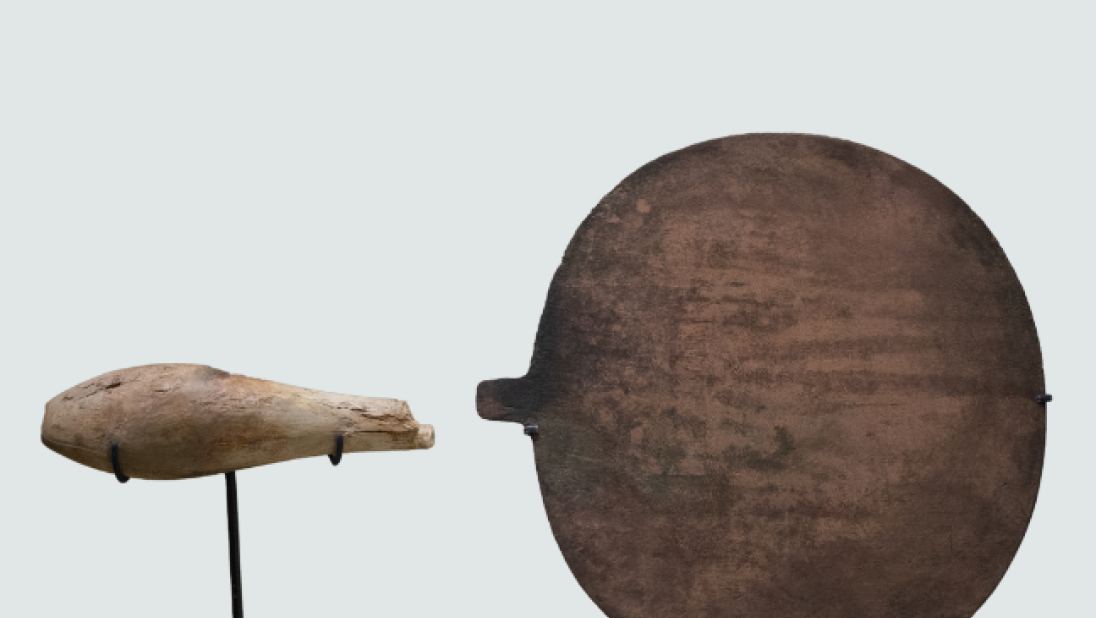
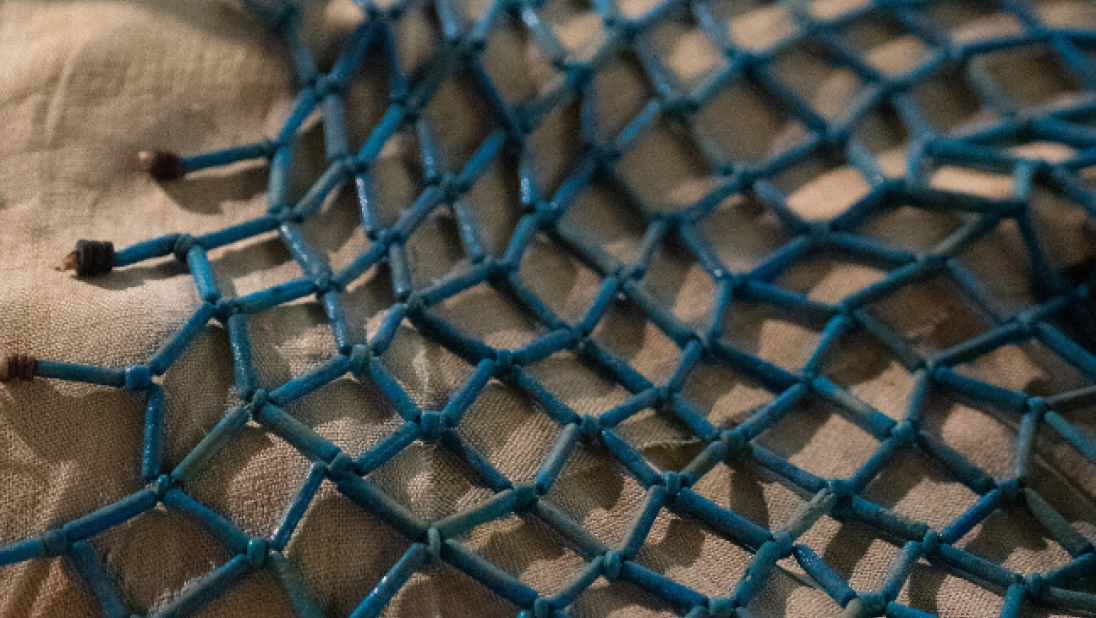
These objects are on display in our gallery, Life and Death in Ancient Egypt. The mirror and comb are not personally related to Takabuti, but tell the story of everyday life in Ancient Egypt more widely. The blue faience necklace/cape is worn by Takabuti. Faience is a non-clay ceramic with a metal colorant - in the case of this bright blue, copper. Blue was an important colour for Ancient Egyptians, symbolising life.
Scientific research carried out indicates that Takabuti died in her late 20s to early 30s as a result of a stabbing wound to her back from an axe-like instrument. When she died, she was prepared for the afterlife through mummification. These were important religious beliefs and practices in Ancient Egypt.
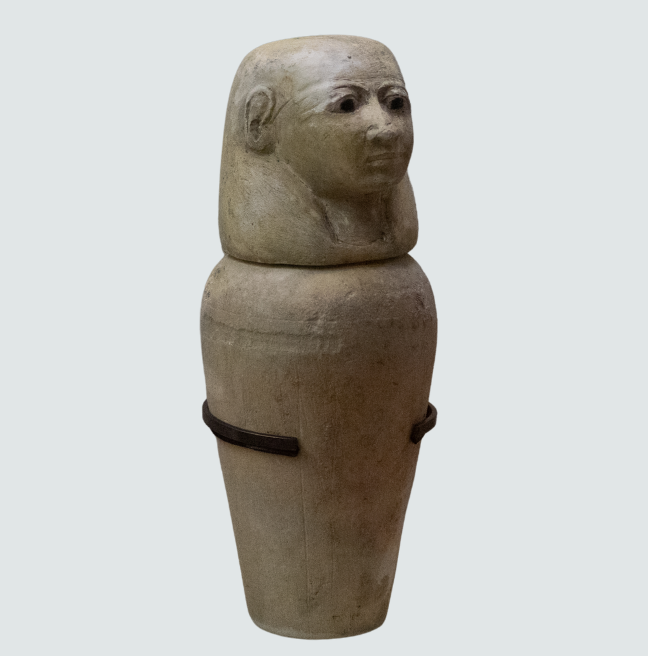
The mummification process involved all her major organs being removed. Her heart was also removed, but then was wrapped and repositioned inside her body. In Ancient Egypt the heart was considered the most important organ of the body. The Chapters/Spells for Coming-Forth-by-Day, more commonly known as The Book of the Dead by European Egyptologists, details the journey to the afterlife which included having your heart placed on a set of scales and weighed against the Feather of Truth. If a person had led a decent life, the heart balanced with the feather and was their ticket to live forever in paradise.
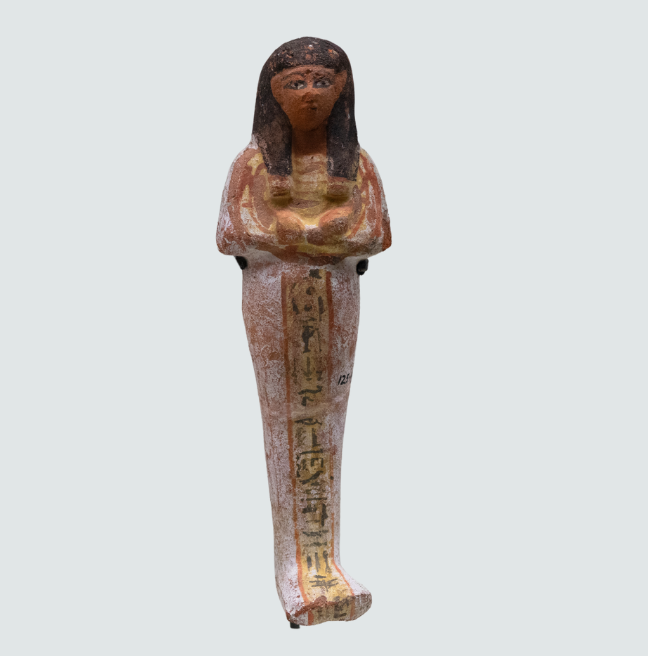
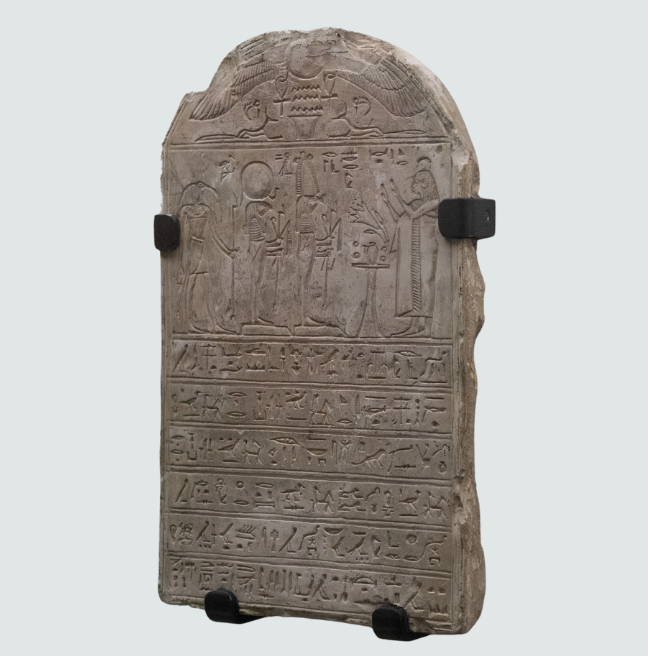
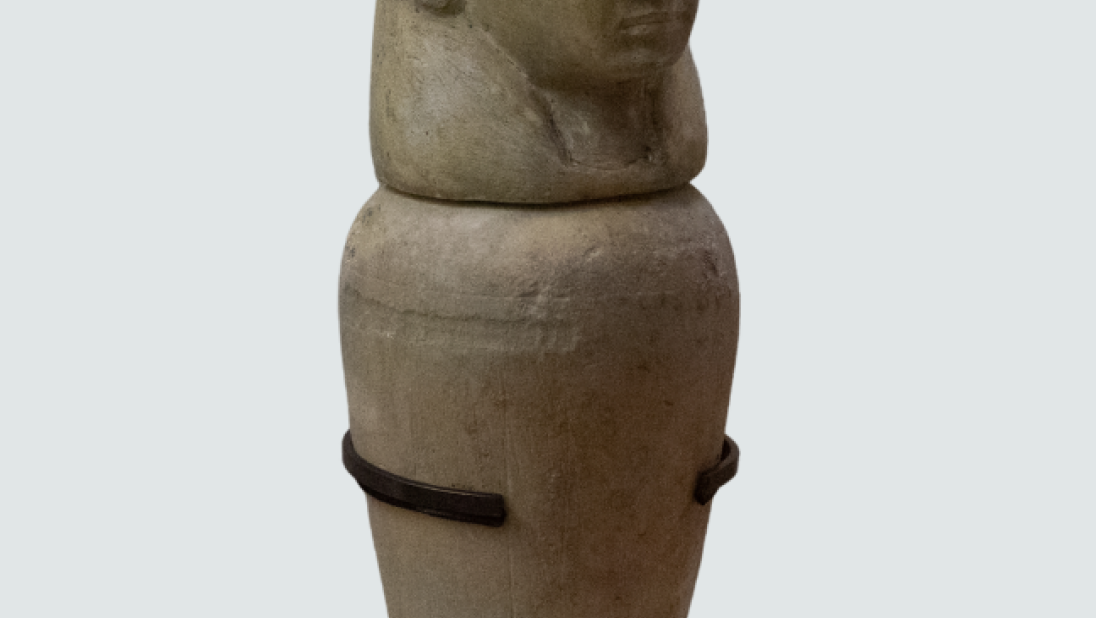
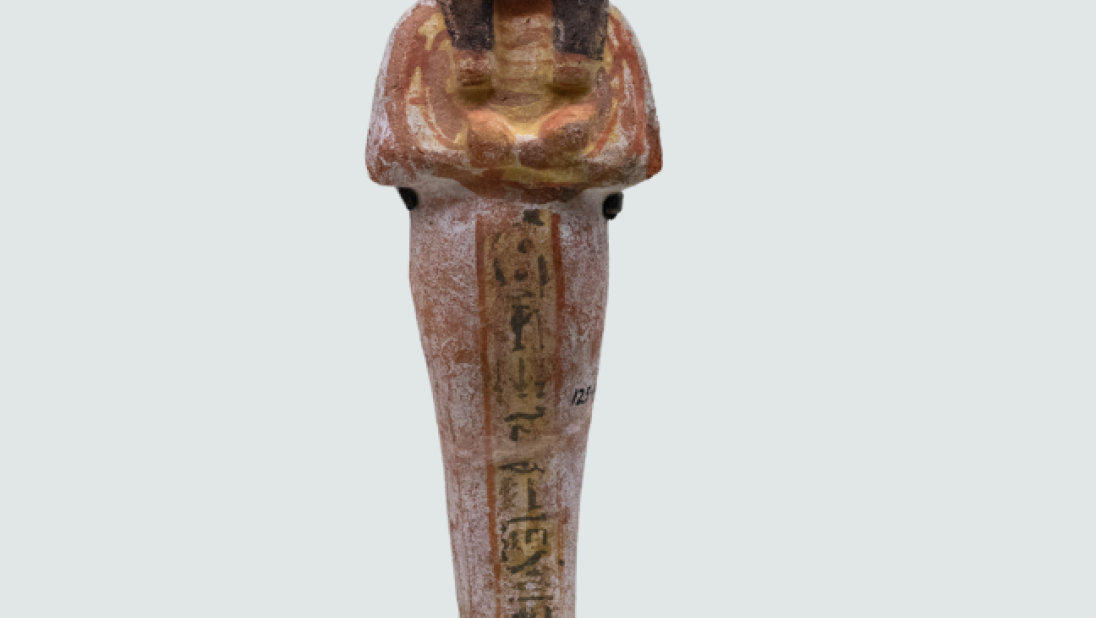
These objects are on display in our gallery. These items are not personally related to Takabuti but to the story of Ancient Egypt more widely.
Takabuti was wrapped in linen and placed inside her coffin, which is inscribed with details about her identity and with prayers for the afterlife. She was buried in the city of Thebes, known as Waset, in Ancient Egypt, which is now the modern city of Luxor. After her death she was most likely visited in her tomb by friends and family.
Some believe the mummification process was to help preserve the body for the afterlife; however, others believe the intention of mummification relates to transforming the dead into gods.
Takabuti’s remains were purchased in the 1800s at an antiquities market in Luxor, Egypt, by Thomas Greg from Holywood, County Down. Greg brought her to Belfast in 1834. She was one of the first mummified individuals from Ancient Egypt to be brought to Ireland. She was unwrapped in front of an invited audience in 1835.
This sort of spectacle might make us uncomfortable today, yet almost 200 years later Takabuti is still unwrapped and on public display. Have we really moved on?
Takabuti's remains were gifted to the Ulster Museum in 1910 by the Belfast Natural History and Philosophical Society and has been on display, partially unwrapped, ever since. Her story is centrally told in the ‘Life and Death in Ancient Egypt’ gallery, however her voice has always been missing. What would Takabuti say about her story in life and death?

Much of the Ancient Egyptian collection at National Museums NI was acquired during the 19th and early 20th century colonial period in response to increasing Western interest in the culture of Ancient Egypt, often referred to as ‘Egyptomania’.
Visiting Takabuti has been a much-loved part of the Ulster Museum experience since it opened its doors in Stranmillis in 1929. Over the years, Takabuti has been the subject of much research. Edward Hincks, an Egyptologist from Ireland, translated the hieroglyphic script on her coffin, and it’s from this research that we learn a lot about Takabuti. In 2007-09 and 2018-20 scientific analysis and imaging were undertaken in partnership with Queen’s University Belfast and the University of Manchester to reveal more about her story.
Following this period of both popular interest and scientific research, we are rethinking how to ethically curate and care for human remains in our World Cultures collections in partnership with communities, with a focus on respect and dignity.
The ‘Life and Death in Ancient Egypt’ gallery in which Takabuti is displayed was refreshed in October 2024 with the help of museum professionals and communities here and in Egypt. This refresh prioritised decolonisation and the ethical treatment of human remains from Ancient Egypt.
Visitors are now given a level of choice as to whether or not they wish to view Takabuti’s remains. For those that choose to, a more private viewing experience is provided. New interpretative panels, labels and a video have been developed to rehumanise Takabuti’s story, explore different perspectives, and initiate debate around the ethics of displaying human remains from other cultures.
For some audiences there is joy and curiosity felt when learning about Ancient Egypt through being able to connect with ancient Egyptian human remains in the museum. However, this is a privilege not afforded to all. There are those that cannot visit, feel it's offensive and unnecessary, or those that feel the pain and trauma attached to the violent history of colonisation.
The museum is mindful of all these perspectives as the gallery continues to evolve. Consultation with audiences and experts here and in Egypt will inform our priorities for the Ancient Egypt gallery.
Lead image: Takabuti's coffin lid showing a stylised face.
Twin Figure statuettes from Nigeria hold profound meaning for Nigerian communities. In this article, volunteer Beulah reflects on the personal significance of seeing these on display.
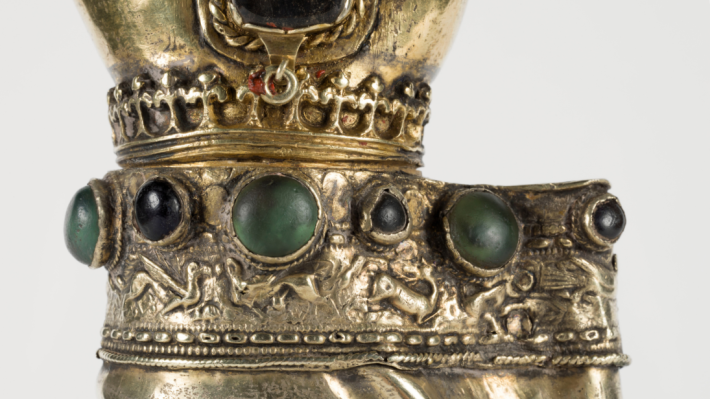
Learn about the 14th-century Shrine of St. Patrick's Hand with Curator of Archaeology, Niamh Baker. The shrine is still used today during mass on St. Patrick’s Day in St. Patrick’s Parish, Belfast.
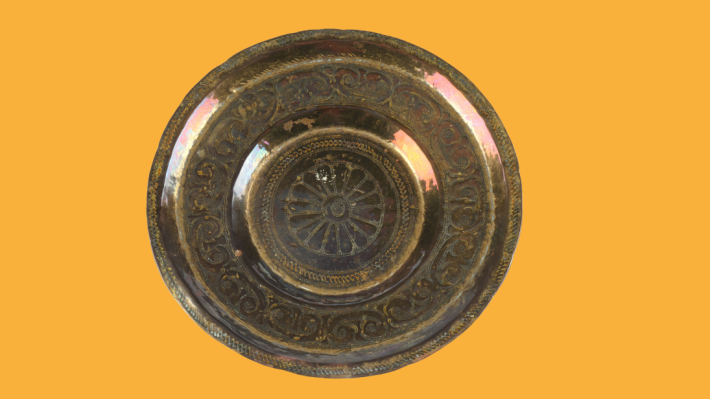
Guest blog from Dr. Olusegun Morakinyo, exploring the African collection and in particular, the Bida plate.